Being Seen / Side visibility
The side of the bike nobody lights
Headlights and tail lights are built for traffic in line with you. At intersections, driveways and crossings, drivers see a bicycle side-on, and that is where most bikes are almost invisible.
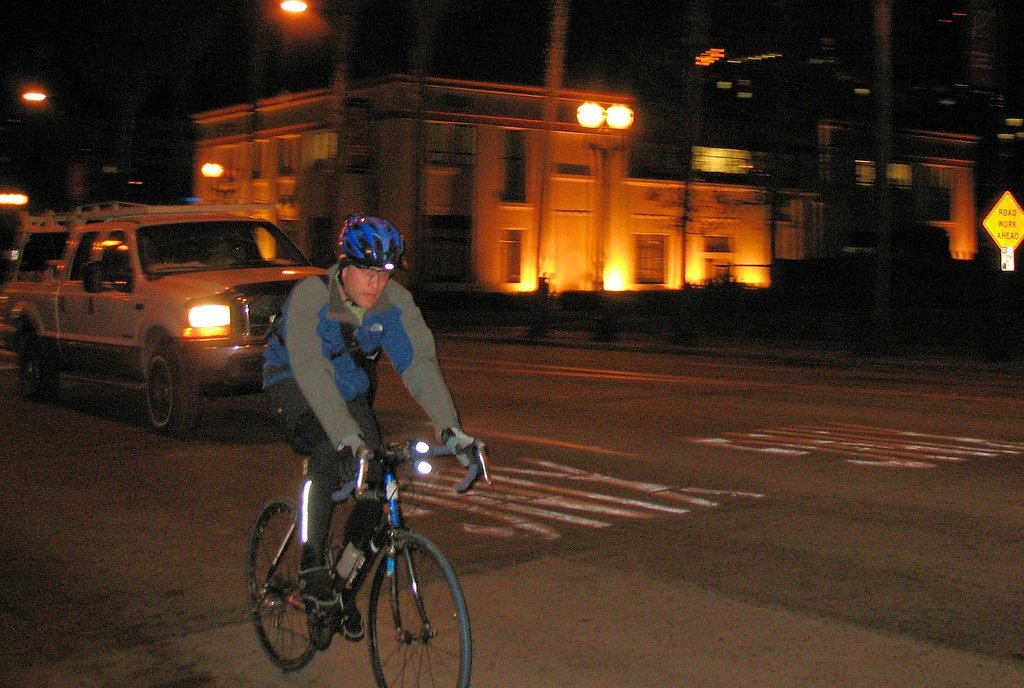
Stand at the corner of any quiet street after dark and watch the bicycles go past. From behind, most show a red blink. From the front, a white beam. Turn your head ninety degrees and look at the same bikes crossing your path, and many of them almost disappear: a dark frame, two thin wheels, a rider in a dark coat, and maybe a reflector catching the light for a fraction of a second.
That is not a small gap. A driver pulling out of a side road, a car turning across a bike lane, a bus nosing out of a parking lot: all of them see the bicycle from the side. The lights cyclists spend the most money on are designed for the two directions where the rider is least likely to be surprised.
Why most lights miss the side
Bicycle lamps are built to throw light in a cone. A good front light puts its output on the road ahead and keeps it out of oncoming drivers' eyes; a rear light is aimed at the traffic behind. Some newer lamps add small side windows or amber cut-outs, and they help, but the light that leaks sideways is a small share of what the lamp produces.
Reflectors have the same problem in a different form. A reflector only sends light back toward its source, so it works when a car's headlights are pointing at it. A driver waiting to turn at an intersection usually has headlights pointing across the road, not at the bike coming along it, which means the reflector may stay dark until the very last moment.
What the eye notices at night
Two things make an object stand out in the dark: it is bright compared with what is around it, and it moves in a way the eye does not expect. A single steady point of light at handlebar height reads as "something over there". A circle of light spinning at wheel height, or a pair of pedals bobbing up and down, reads as "a bicycle".
That second point is the reason pedal reflectors and reflective ankle bands earn their place. Studies of night-time conspicuity have repeatedly found that marking the moving joints of a person, the ankles and knees, makes them recognizable as a person at a greater distance than the same amount of reflective material worn on the torso. The same logic applies to a bicycle: light on the parts that move tells a driver what they are looking at.
Five ways to light the side of a bike
1. Keep the wheel reflectors
New bicycles sold in the United States have to come with side reflectors on the wheels or reflective sidewalls on the tires. Many riders take the spoke reflectors off because they look cheap or rattle. They are worth keeping, or replacing with reflective tires, which give a full circle rather than two dots.
2. Reflective tire sidewalls
A tire with a reflective stripe draws a complete ring when car headlights hit it, and the ring changes shape as the angle changes. It is the cheapest permanent improvement to side visibility and it needs no batteries.
3. Spoke and hub lights
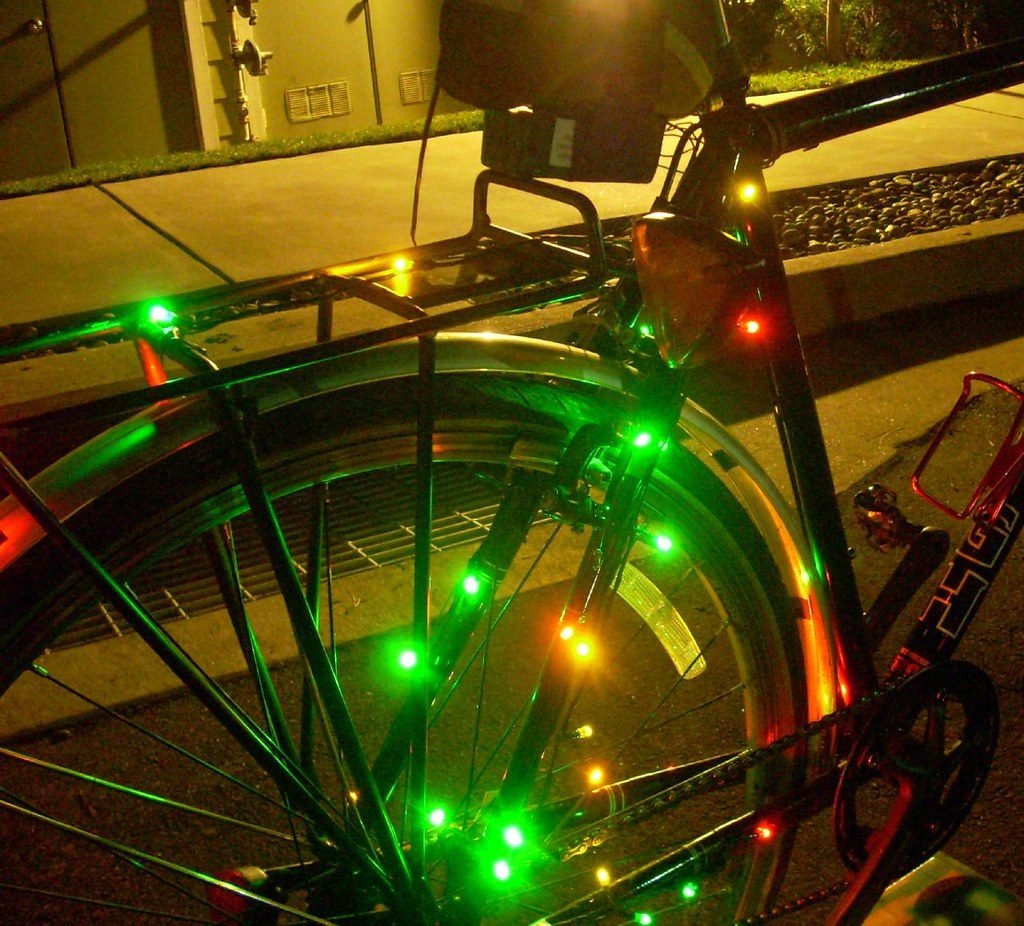
Small battery lights clipped to a spoke or mounted near the hub produce a moving circle of light without any input from a car's headlights. They range from single-LED clips to programmable light blades that draw images inside the wheel. We cover the simple end of the range in our guide to clip-on spoke lights.
4. Lights and reflective material on the rider
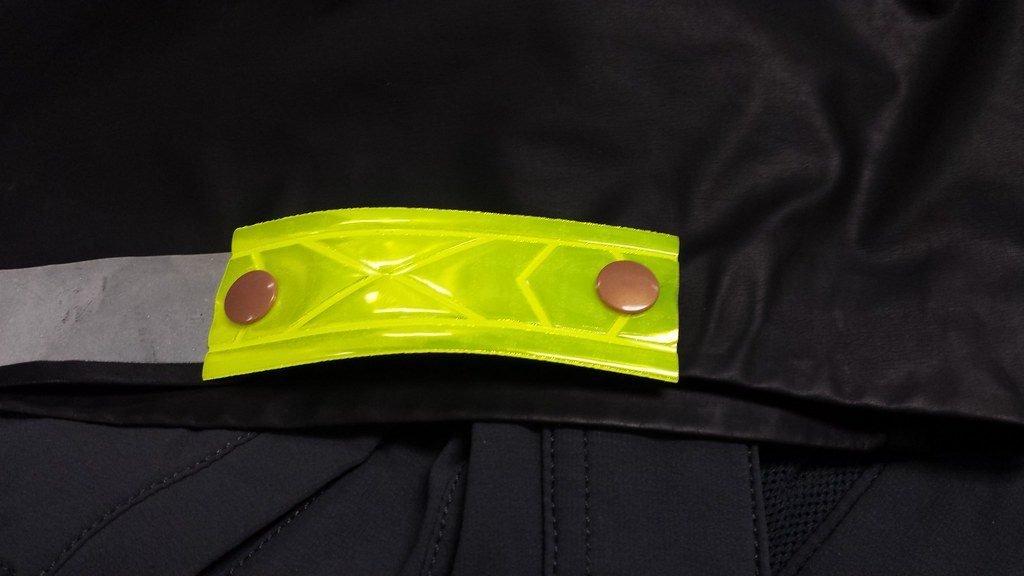
Reflective ankle bands, gloves and a jacket with reflective panels at the sides all help. A rear light on a backpack or helmet sits higher than the seat post and is easier to see over parked cars.
5. A front lamp with side cut-outs
If you are choosing a new headlight, look at it from the side before you buy. Some models have a translucent lens edge or small side windows; others go completely dark at ninety degrees.
A simple test
Ask someone to park a car at the end of your street with its headlights on, then ride your bike slowly across the beam about about 100 feet away. Then do it again with the headlights off and only the street lights. Watch from the driver's seat if you can. Most people who try this add something to the side of their bike the same week.