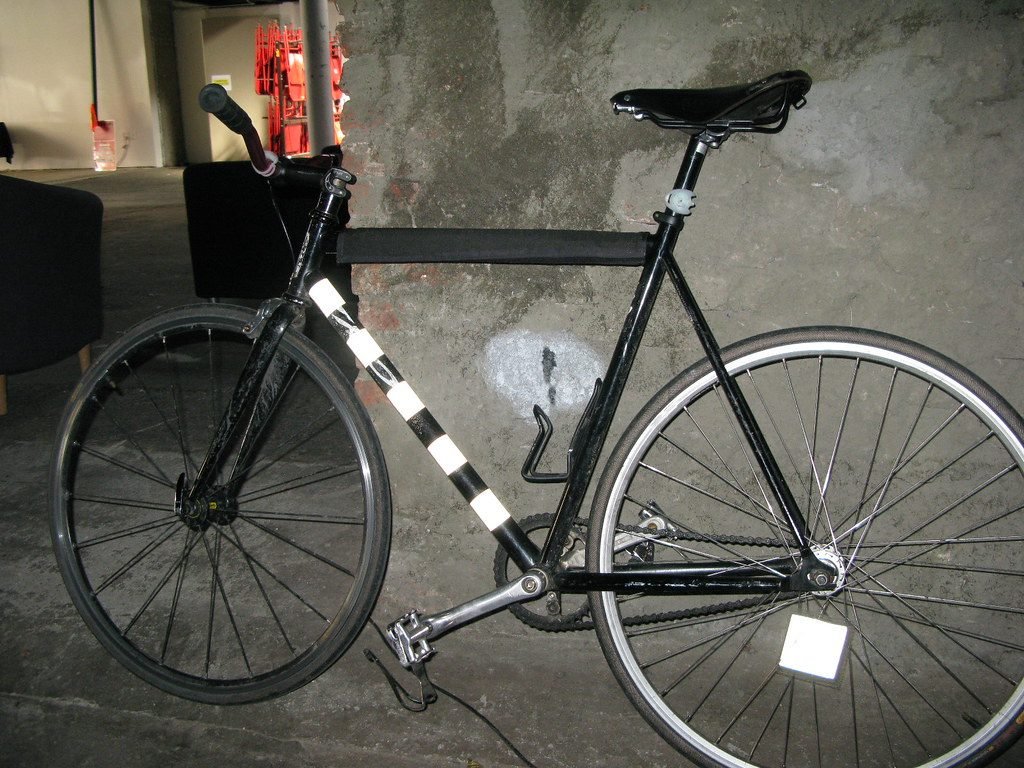
Being Seen / Reflectors
Reflectors: the parts everyone takes off
Every new bicycle sold in the US leaves the shop with a full set of reflectors. Many are gone within a month. Here is what each one does, what the rules require, and which ones are worth keeping.
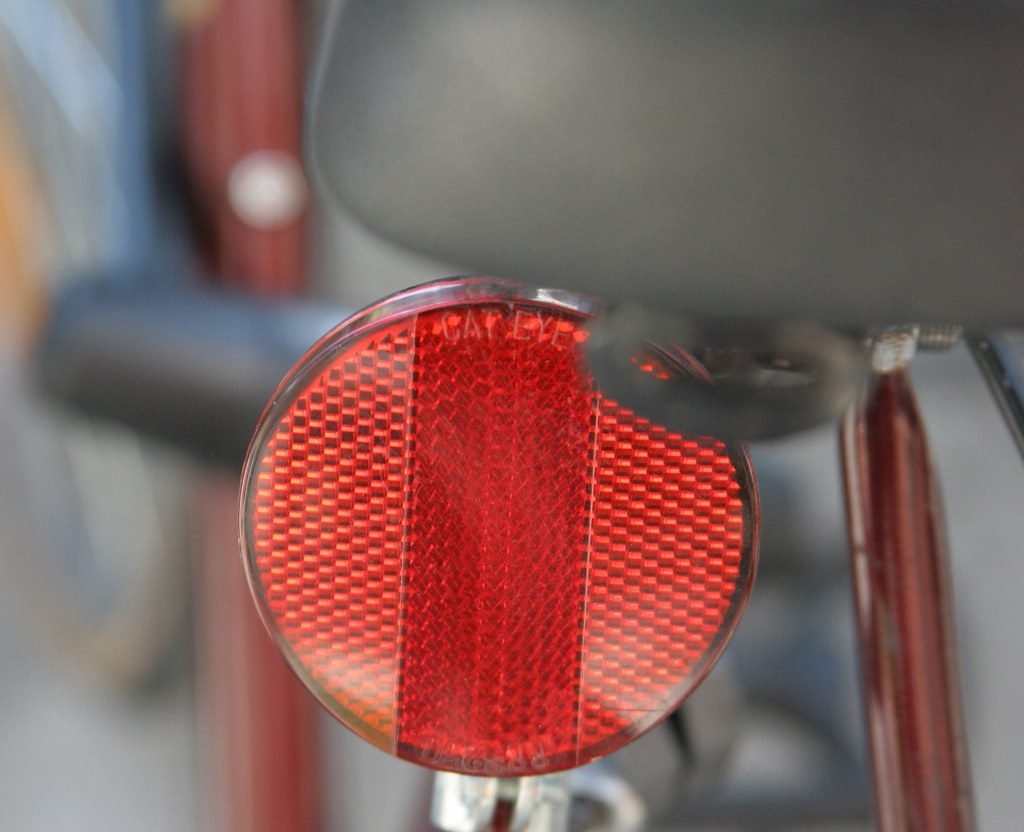
Reflectors are the least glamorous safety equipment on a bicycle. They come in the box, they are bolted on by the shop, and a surprising number of riders unbolt them again on the first weekend. Some rattle. Some look like they came off a child's bike. But they keep working when your batteries have died, and some of them cover angles that no lamp you can buy covers well.
How a reflector works
A bicycle reflector is not a mirror. Look closely at one and you will see a grid of tiny prisms, each with three faces at right angles to each other, like the inside corner of a box. Light that enters one of these corners bounces off all three faces and leaves in the direction it came from. The technical name is retroreflection.
That property is what makes reflectors useful and what limits them. A driver whose headlights are pointing at your bike gets a bright flash back, right at their eyes. A driver whose headlights are pointing somewhere else gets nothing. Reflectors are excellent when a car is approaching from directly behind or in front, and much weaker at intersections, where the car's lights are aimed across your path.

What US rules require on a new bicycle
The Consumer Product Safety Commission's bicycle standard, in Title 16 of the Code of Federal Regulations, Part 1512, sets out the reflectors a new bicycle must carry when it is sold in the United States. In plain terms:
- a white reflector facing forward;
- a red reflector facing backward;
- reflectors on the front and back of each pedal;
- side reflectors on the wheels, or tires or rims with continuous reflective sidewalls instead.
The standard applies to the bike as sold, not to how you ride it later. State traffic laws are a separate matter. Most US states require a white front lamp at night and a red rear reflector, and some also require a red rear lamp. The wording and distances vary, so it is worth reading your own state's vehicle code rather than relying on a summary.
Which reflectors to keep
Pedal reflectors: keep them
They move. Two amber points bobbing up and down at ankle height are one of the clearest signals that the thing ahead is a bicycle. If you switch to pedals without reflectors, add reflective ankle bands.
Wheel reflectors: keep them or replace with reflective tires
The two spoke reflectors are the only standard equipment aimed at the side. If you dislike them, tires with a reflective sidewall stripe do the same job better, drawing a full circle rather than two dots.
Rear reflector: keep it
It is the backup for the day your rear light runs flat halfway home. Many rear lights now include a reflector lens, which covers it.
Front reflector: optional if you always use a front lamp
It adds little next to a working headlight, but it costs nothing to leave on.
Reflective material beyond the reflectors
Reflective tape on the frame, crank arms or fenders can make a bike much more visible when headlights hit it, especially if the tape outlines the shape of the bicycle. A strip on each crank arm is a cheap way to add another moving point. Reflective tape in a color close to the frame is barely visible in daylight and still works at night.