Being Seen / Rear lights
Rear lights: steady, flashing or both
Flashing modes are easier to notice. Steady modes are easier to judge. The answer for most riders is to use one of each, and to mount them where a driver will actually look.
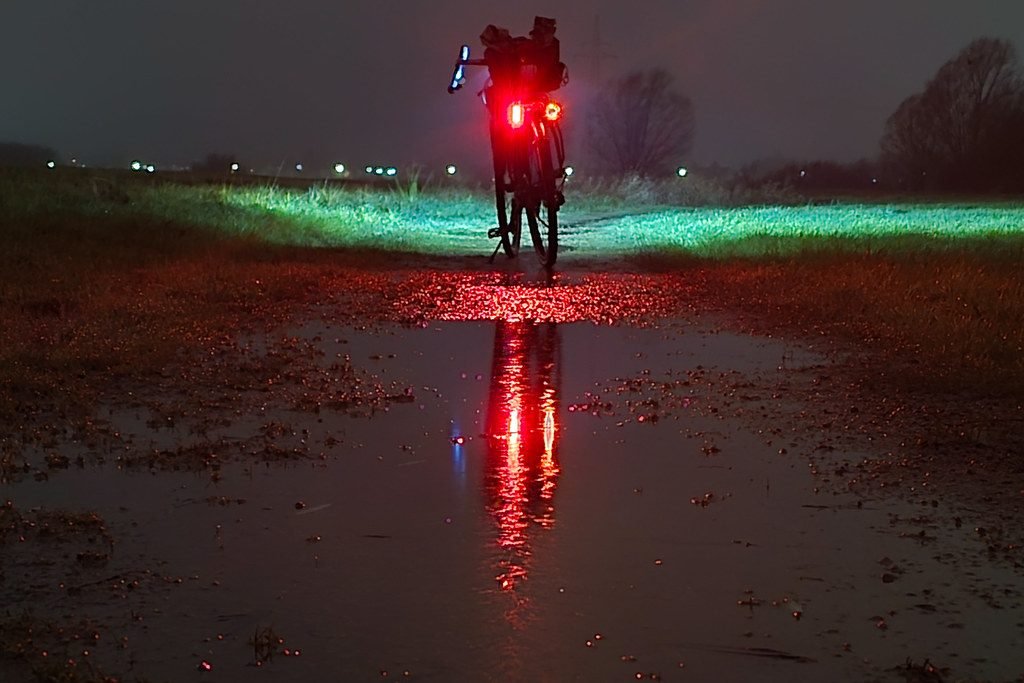
The rear light is the one piece of lighting most riders get right. It is cheap, it is small, and even people who ride without a headlight often have a red blink on the seat post. But a few choices make a large difference to how early a driver behind you notices it and how well they can judge where you are.
Steady or flashing?
A flashing light grabs attention. The eye is very good at noticing change at the edge of its field of view, and a blinking red point on a dark road is hard to miss. The trade-off is that a flashing light is harder to judge for distance and speed, because the eye does not get a continuous position to track.
A steady light is the opposite: less eye-catching at first, easier to follow once noticed. Some countries have, at times, required at least one steady rear light for exactly that reason.
The simple answer is two rear lights: one steady, one flashing. If you only have one, a mode that pulses between bright and dim, rather than switching fully off, is a reasonable middle ground.
Brightness
Rear lights are usually sold by lumens. On a dark rural road, a modest light is visible from a long way off; in a city full of brake lights and shop signs, a rear light needs to be considerably brighter to stand out. In daylight, only the brightest rear lights are noticeable at any distance, which is why many riders now leave a daytime flash mode on all year.
More is not always better. A very bright flashing light at close range in slow traffic can dazzle the driver behind you. Many lights have a lower mode for group rides and stop-start traffic; use it.
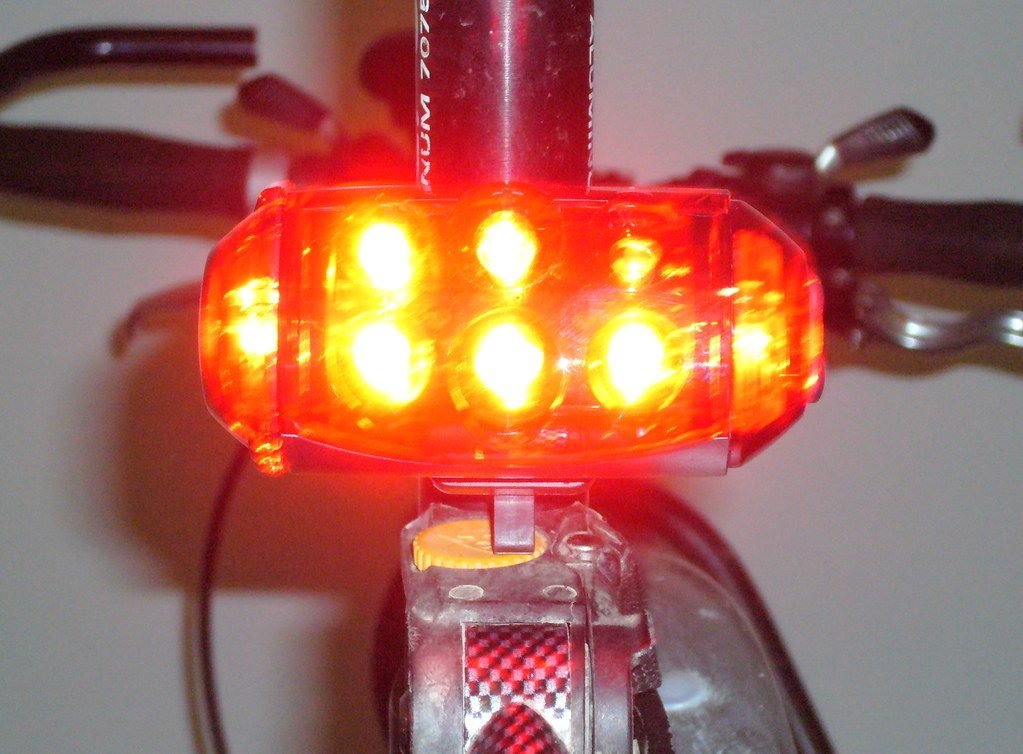
Where to mount it
- Seat post is the default and works well, unless a saddle bag or long coat covers it. Check from behind.
- Rack or fender keeps the light clear of bags and coats and is often lower, closer to the height of car tail lights.
- Helmet or backpack puts a second light higher up, where a driver can see it over the roof of a car in front.
- Seat stay, low and to the side, can be useful as a second light and adds a little side visibility.
Make sure the light points straight back, not at the road or the sky. A rear light angled down by the weight of a saddle bag can lose most of its useful output.
Batteries
Run-time figures on the box usually refer to the lowest or flashing mode with a fresh battery. In cold weather, rechargeable lithium cells give noticeably less. If you commute in winter, charge more often than you think you need to, and keep a cheap backup light with disposable batteries in your bag. Our notes on batteries and wet weather go into more detail.