Being Seen / Batteries
Wet nights, cold batteries
Most bike lights fail for one of two reasons: water got in, or the battery ran out sooner than expected. Both are easy to prevent once you know how they happen.
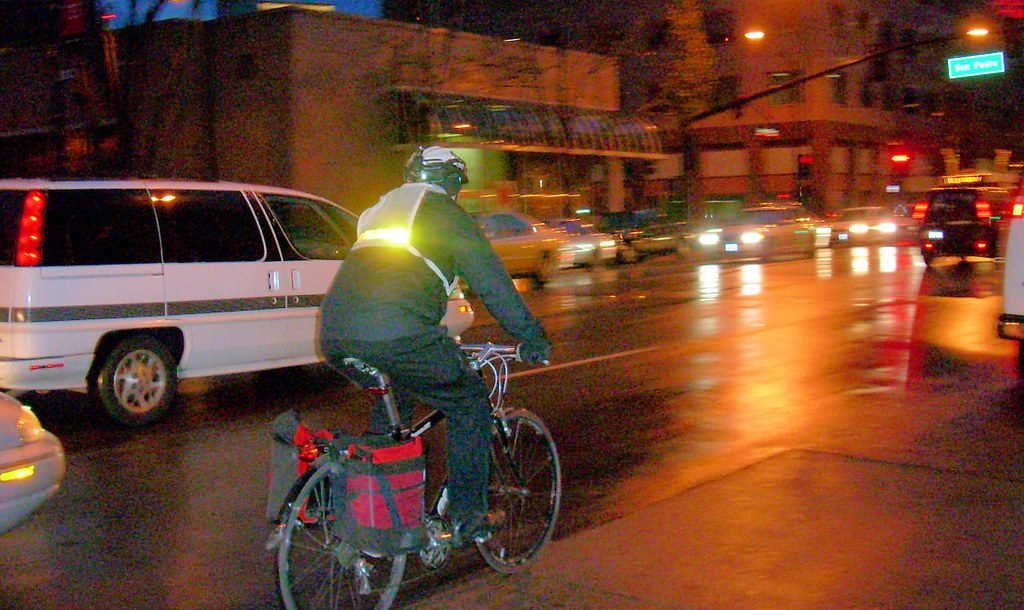
One of the most common questions on the old Hokey Spokes FAQ was about a blade that would not switch off. The answer was batteries. Each blade ran on three AA cells, 4.5 volts when fresh, and as they ran down the electronics stopped responding properly. The fix was a new set of cells. The same thing still catches out riders today, with different batteries and different lights.
Rain
Rain causes two problems. The first is visibility: wet roads reflect headlights and street lamps, drivers' windshields are smeared, and a bicycle becomes one more small light among hundreds. The second is the light itself: water gets past seals, charging ports corrode, and switches stop working.
- Check the rating. Many lights carry an IP rating. IPX4 means protection against splashing water; IPX6 and above against strong jets; IPX7 against short immersion. For year-round commuting, look for IPX5 or better.
- Close the charging port. Most failures start at the rubber flap over the USB socket. Push it fully closed before every wet ride.
- Dry it indoors. After a wet ride, open the port and let the light dry at room temperature, not on a radiator.
- Mount it away from spray. A rear light on a seat post catches spray from the back wheel unless there is a fender.
Cold
Lithium-ion batteries deliver less capacity in the cold. On a freezing morning, a light that claims three hours on a mode may last noticeably less. Charge after every ride in winter rather than waiting for the warning light, and store the light indoors.
Disposable batteries
Lights that take AA or AAA cells are less common now but still useful as backups, because a spare set of cells lasts years in a drawer. Two habits help:
- Replace all the cells in a light at the same time, with cells of the same type and age.
- Take the cells out if the light will not be used for a while. Old alkaline cells can leak and corrode the contacts, which can ruin the light. The Hokey Spokes FAQ warned about exactly this.
A simple routine
- Charge both lights after every ride in winter, and weekly in summer.
- Keep a small, cheap backup rear light in your bag, ideally one that runs on disposable cells.
- Test both lights before you leave, not when you notice it is getting dark.
- Once a month, check the mounts, the seals and the lens for cracks.
None of this is complicated. The aim is simply that your lights are working on the one evening it really matters.