Being Seen / Headlights
Headlights: what the lumen number does and does not tell you
A 900-lumen light is not automatically better than a 400-lumen one. Beam shape, run time and where the light goes decide whether you can see the road and whether drivers can see you.
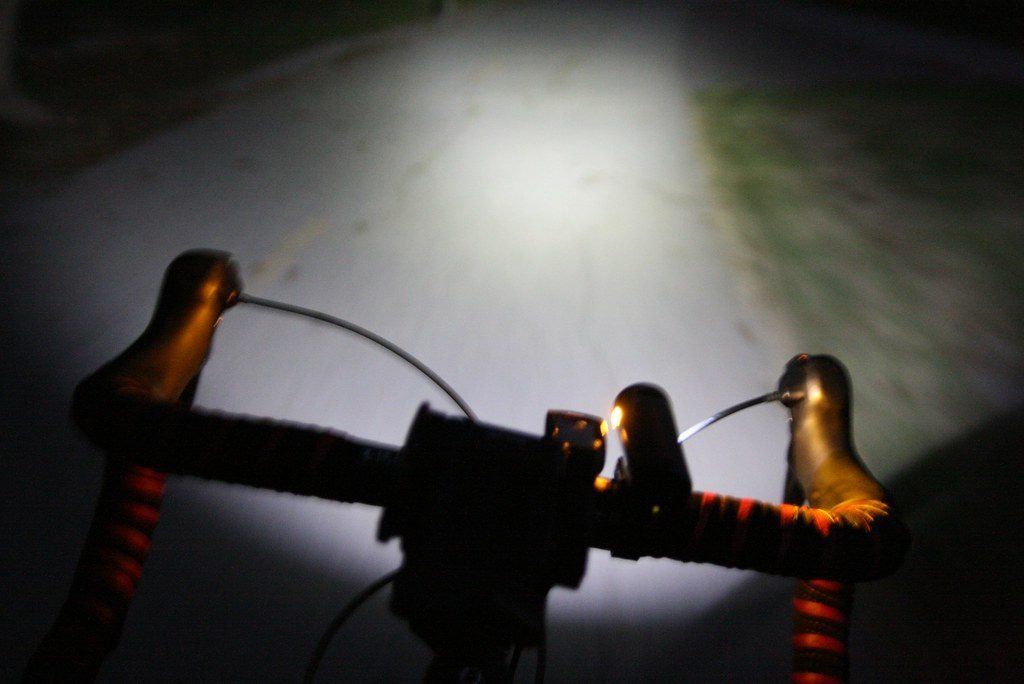
In the early 2010s, the old Hokey Spokes site started selling a 900-lumen headlight built around a Cree XM-L LED, a chip that had just made very bright, very cheap bicycle lights possible. The page described a night ride through Chicago with thousands of cyclists, and how few of them had any headlight at all. More than a decade later, bright lights are everywhere and cheap. Choosing one has become harder, not easier.
Two different jobs
A headlight does two separate things. It lets you see the road: potholes, curbs, gravel, a dog on a lead. And it lets other people see you: the driver about to turn left across your path, the pedestrian stepping off the sidewalk.
On lit city streets, the second job matters most and a light of a few hundred lumens is usually plenty. On an unlit path or country road, the first job takes over, and you need enough light, spread widely enough, to ride at your normal speed without overrunning what you can see.
What lumens measure
Lumens measure the total amount of light coming out of the lamp. They say nothing about where that light goes. Two lights with the same lumen figure can look completely different on the road: one throws a narrow hot spot far ahead, the other spreads a wide pool close to the wheel.
Manufacturers also measure lumens differently, and the headline figure is usually the maximum mode, which may only run for an hour or less. A more useful question when comparing lights is: how bright is the mode I will actually use, and for how long does it last?
Beam shape and glare
A round beam pointed straight ahead puts a lot of light into the eyes of oncoming cyclists, pedestrians and drivers. On shared paths, this is the most common complaint about bright bike lights. Either choose a light with a shaped, cut-off beam, or angle a round-beam light down so that the brightest part lands on the road several yards ahead.
Mounting
- Handlebar: the standard place. The beam follows where you steer.
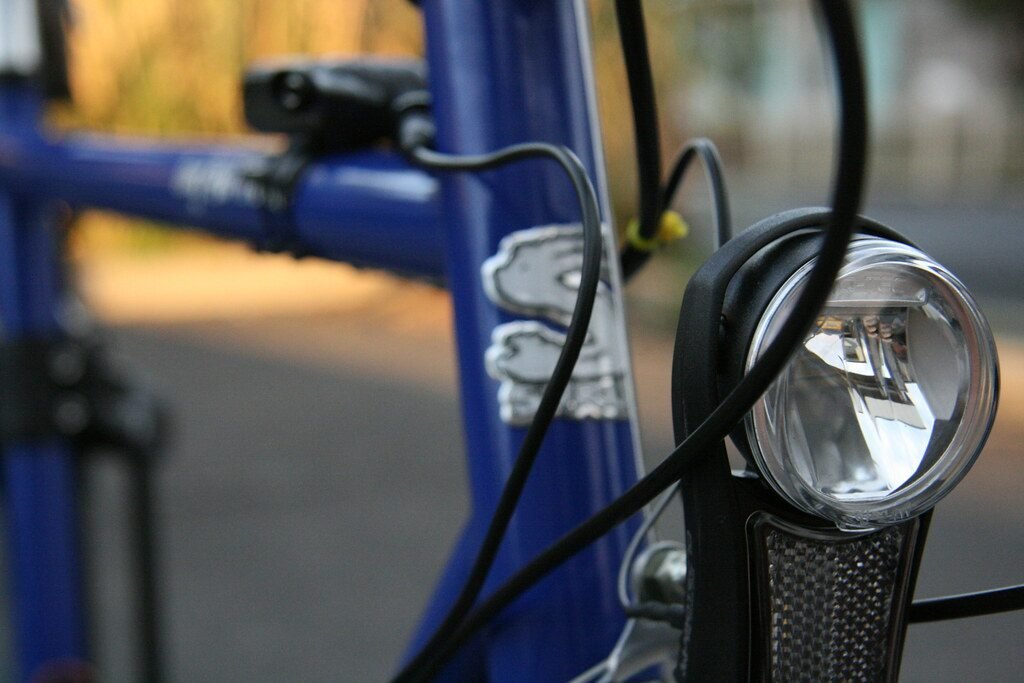
- Fork crown or fork leg: lower, steadier, and common with dynamo lamps. Shadows from bumps are longer and easier to read.
- Helmet: a small second light that points where you look, useful on winding unlit paths. Never use a helmet light on full power facing other people.
Batteries and dynamos
Most modern headlights charge over USB. They are light and convenient, but the battery fades with age and in cold weather. A hub dynamo, built into the front wheel, powers the light whenever you ride and removes the question of charge altogether; it costs more up front and adds a small amount of drag. For daily commuters, a dynamo setup is hard to beat.
What to look for
- A usable mid mode that lasts your longest ride, with margin.
- A beam shape that suits your roads: shaped cut-off for shared paths, wider spread for dark lanes.
- Some side visibility, through the lens edge or small side windows. See why the side matters.
- A mount you can tighten without tools, that does not droop on rough roads.
- A battery indicator you can actually read.